


Table of Contents
- Why Nostalgic Games for Adults Still Matter in 2026
- How We Picked These Nostalgic Games for Adults
- 1. Reminiscing: The Game for People Over Thirty (1939-1989)
- 2. Facts in Five: The 1967 3M Trivia Challenge
- 3. Trivial Pursuit DVD Pop Culture (2003): DVD-Era Trivia
- 4. Whitman Backgammon (1973): Two-Player Strategy
- 5. RISK: Parker Brothers World Conquest (1975/1980)
- 6. The Inventors: Parker Brothers 1974 Creative Fun
- Comparing the Picks at a Glance
- Frequently Asked Questions
Last Updated: October 16, 2026
Why Nostalgic Games for Adults Still Matter in 2026
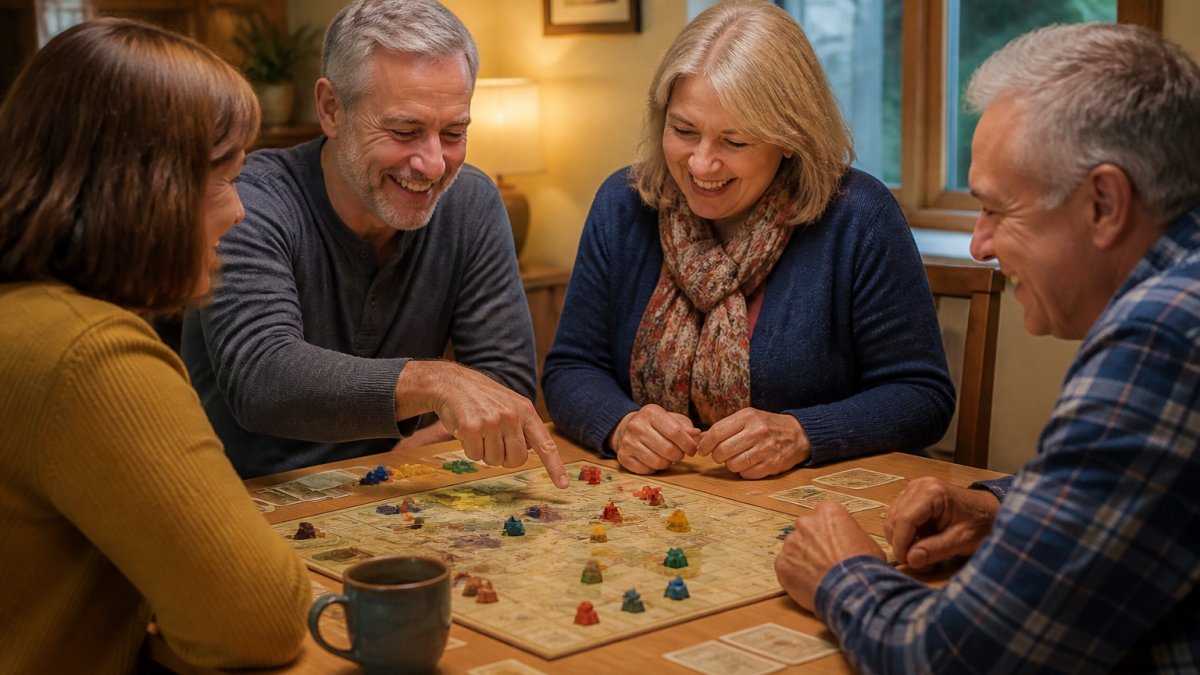
The case for top rated nostalgic games for adults rests on something a screen can't replicate: a table, a timer, and people trying to remember the same thing at once.
That's the throughline here. Nostalgia isn't the product. It's the side effect of playing something physical with other people.
The research on cognitive and social engagement in later life points the same direction. The National Institute on Aging's cognitive health resources notes that staying mentally and socially active is one of the more consistent habits linked to healthier aging.
How We Picked These Nostalgic Games for Adults
Most nostalgic-game lists rank titles by reputation. We rank them by whether an adult household can actually get one to the table this month.
The five criteria and their weights
| Criterion | Weight | What earns a high score |
|---|---|---|
| Nostalgia pull | 25% | Tied to a specific decade or shared memory; recognizable box, components, or theme |
| Teach time | 20% | Rules explainable in five minutes or less to a new player |
| Session fit | 20% | Finishes inside a realistic evening, with a shorter variant where possible |
| Replayability | 20% | Different outcome each session; rewards repeat play rather than one walkthrough |
| Condition transparency | 15% | Complete or clearly described; missing pieces disclosed before purchase |
How replayability is scored. A game earns full marks only if the same group can play it twice in a month without the outcome feeling predetermined.
How condition is scored. Vintage means vintage. A complete copy with worn corners outscores a pristine box with a missing die, because one is playable tonight and the other is not.
What we deliberately did not weight. Box art, collector resale value, and franchise popularity.
The picks by group size and session length
| Game | Players | Era | Typical Session | Best For |
|---|---|---|---|---|
| Reminiscing | 2-4 | 1939-1989 | 45-90 min | Mixed-age conversation |
| Facts in Five | 1-5 | 1967 | 15-30 min | Fast trivia rounds |
| Trivial Pursuit DVD | 2-4 | 2003 | 60-90 min | Pop-culture nights |
| Whitman Backgammon | 2 | 1973 | 20-40 min | Head-to-head play |
| RISK | 2-6 | 1975/1980 | 2-3 hrs (shorter variant available) | Long strategy sessions |
| The Inventors | 2-4 | 1974 | 30-45 min | Creative family play |
How to use this table. Read down the "Typical Session" column first.

A note on availability. Every title here is a vintage or out-of-print edition, which means you are buying a specific copy, not a reprint. That has two practical consequences. First, the exact contents vary from listing to listing, so the photos and condition notes matter more than the title. Second, once a copy sells, an identical one may not appear again soon, if a game matches your group size and session length, that specific copy is the one to evaluate, not the title in the abstract.
A note on modern play. None of these require a subscription, an account, or an internet connection to run, with one exception.
1. Reminiscing: The Game for People Over Thirty (1939-1989)
Our top pick is Reminiscing, and it's the one we recommend most often for mixed-age tables. The game covers 1939 to 1989, so it works whether your group remembers those years firsthand or just enjoys hearing about them. It plays with 2-4 players or teams.
What makes it different: the questions aren't trivia in the usual sense. They prompt stories. A round can turn into twenty minutes of "do you remember when" before anyone scores a point. That's the point.
Where it falls short: if your group wants a competitive scoreboard, this isn't it. Reminiscing is a conversation starter wearing a game's clothing.
2. Facts in Five: The 1967 3M Trivia Challenge
Facts in Five is the fastest game on this list, and that's exactly why it earns a spot. Published by the 3M Company in 1967, it asks players to name five answers in a chosen category before time runs out. It handles 1-5 players, which makes it the only solo-friendly option here.

The speed element is the whole design. Rounds stay short, categories change constantly, and nobody can coast on a single strength. It's a strong choice for a weeknight when nobody has three hours.
The caveat: vintage copies vary in completeness. Check the listing photos carefully, since what's pictured is what ships.
3. Trivial Pursuit DVD Pop Culture (2003): DVD-Era Trivia
Trivial Pursuit DVD Pop Culture is the newest game here, and it's the one for groups who want their nostalgia with video clips attached. This Parker Brothers edition packs over 1,800 questions across six pop-culture categories, with DVD prompts adding music and visual clues. It plays with 2-4 players, ages 14 and up.

The DVD mechanic dates it, and that's the appeal. This edition captures a specific moment when board games and home media collided. For collectors of unusual board games, it's a genuine artifact.
One practical note: you'll need a DVD player. If your household went fully streaming years ago, factor that in before buying.
4. Whitman Backgammon (1973): Two-Player Strategy
Whitman Backgammon is our pick for two players who want a real game, not a party. This 1973 set includes the board, dice, and 30 plastic checkers, and it's rated for ages 7 to adult. Backgammon rewards repeated play, which is rare in a nostalgia purchase.
Reminiscing The Game for People over Thirty Remembering the Years 1939-1989 →
The honest limitation: this is a two-player game, full stop. It's a poor fit for a family gathering and an excellent fit for a couple or a pair of regular rivals.
5. RISK: Parker Brothers World Conquest (1975/1980)
RISK is the heavyweight on this list, and we mean that literally. This Parker Brothers edition runs roughly three hours with 2-6 players, ages 10 and up. The rules include a revised two-player game, expert variations, and shorter-play rules.
That last detail matters more than it sounds. Most people remember RISK as an all-night commitment. The shorter-play variant makes it usable on a weeknight.
Where it falls short: three hours is three hours. For groups that meet rarely, the long game can eat the whole evening.
6. The Inventors: Parker Brothers 1974 Creative Fun
The Inventors is the odd one out here, in the best way. This 1974 Parker Brothers game is about crazy inventions and creative thinking, rated for 2-4 players ages 9 to adult. It's less about knowing things and more about making things up.
That makes it the best bridge game on this list. A mixed group of kids and adults can play it without the adults running away with every round.
One transparency note: our copy is missing the dice. Everything else is included as shown in the photos, and the price reflects that. We'd rather tell you up front than have you find out at the table.
Comparing the Picks at a Glance
Group size is the first filter, but it is not the only one. Use the three questions below in order, and you will land on one or two candidates without reading the whole list again.
Question 1: How many people are actually playing?
- Two players: Whitman Backgammon or Facts in Five. Backgammon is the deeper head-to-head game; Facts in Five is the faster one and the only solo-friendly option here.
- Three to four players: Reminiscing, Trivial Pursuit DVD, or The Inventors. Reminiscing for conversation, Trivial Pursuit DVD for pop-culture recall, The Inventors for mixed ages.
- Five to six players: RISK or Facts in Five. RISK handles six but runs long; Facts in Five handles five and runs short.
Question 2: How long is your window?
- Under 30 minutes: Facts in Five. Rounds are timed and categories rotate, so you can stop after one.
- 30 to 90 minutes: Reminiscing, The Inventors, or Trivial Pursuit DVD.
- Two hours or more: RISK, and only if your group is comfortable with the revised shorter-play rules rather than the full game.
Question 3: What kind of evening do you want?
- Talking and remembering: Reminiscing.
- Competing for a score: Facts in Five, Trivial Pursuit DVD, or RISK.
- Making each other laugh: The Inventors.
- Quiet, repeated rivalry: Whitman Backgammon.
What each pick asks of you before you play
| Game | Setup Effort | Rules to Teach | Special Equipment |
|---|---|---|---|
| Reminiscing | Low | Low | None |
| Facts in Five | Low | Low | Timer |
| Trivial Pursuit DVD | Medium | Medium | DVD player |
| Whitman Backgammon | Low | Medium | None |
| RISK | High | High | None |
| The Inventors | Low | Low | Dice (check listing) |
That last column is the one buyers skip and regret. A DVD-era game without a working player, or a creative game missing its dice, is a box on a shelf. Check the listing photos against the contents list before you commit.
Two more options for shorter sessions. The Logo Board Game at $9.99 handles 2-6 players ages 12 and up, and its brand-recognition format works well as an icebreaker because nobody needs to have played it before. For something quieter, our vintage double-six domino set at $34.99 plays two and stores in a briefcase-style case, which makes it easy to keep on a shelf and pull out without a setup ritual.
How to revisit these without a long commitment. The most common reason a nostalgic game stays in the closet is that it looks like a whole evening. It rarely has to be.
For readers who want to go deeper on the cognitive side, the Alzheimer's Association's brain health guidance outlines how mentally and socially engaging activities fit into overall brain health. A game night checks both boxes at once.
Frequently Asked Questions
What is the best nostalgic game of all time?
There is no single winner, but Reminiscing: The Game for People Over Thirty stands out because it covers the years 1939 to 1989 and turns game night into a conversation about shared memories. For trivia fans, Facts in Five (1967) and Trivial Pursuit DVD Pop Culture (2003) offer different eras of knowledge. The best nostalgic game for adults is the one that matches your own formative years and the people you play with.
What are some nostalgic board games for adults that work well at parties?
The Logo Board Game handles 2 to 6 players and works for ages 12 and up, which makes it easy to include a mixed group. Trivial Pursuit DVD Pop Culture suits 2 to 4 players and adds video clips and music for a livelier round. RISK runs about 3 hours for 2 to 6 players, so it suits a dedicated game night rather than a casual drop-in party.
Are vintage jigsaw puzzles and classic games good for socializing?
Yes. Board games like Reminiscing and The Logo Board Game are built around conversation, so they naturally get people talking. Jigsaw puzzles work differently, since they allow quiet parallel focus with occasional collaboration. Both formats give adults a screen-free way to spend time together, and neither relies on notifications or a controller to keep the group engaged.
What are the benefits of puzzles for adults?
Puzzles and classic games give adults a low-pressure way to stay mentally engaged, since they ask for pattern recognition, recall, and planning without a screen. Many adults also use them to unwind after work or to share an activity with family. The main benefit is not a score or a streak; it is a reason to sit down together and focus on one thing at a time.
What screen-free games for adults can you play in a short session?
Facts in Five plays in quick timed rounds, so you can stop after one or two without losing your place. The Vintage Domino Set works for two players and any short window. Longer titles like RISK need roughly 3 hours, though its rules include variations for shorter play if you want a condensed round.
0 comments